
Spring Blossoms and Untimely Reflections
An analysis of Prince Andrei’s transformative encounter with memory in Tolstoy’s War and Peace

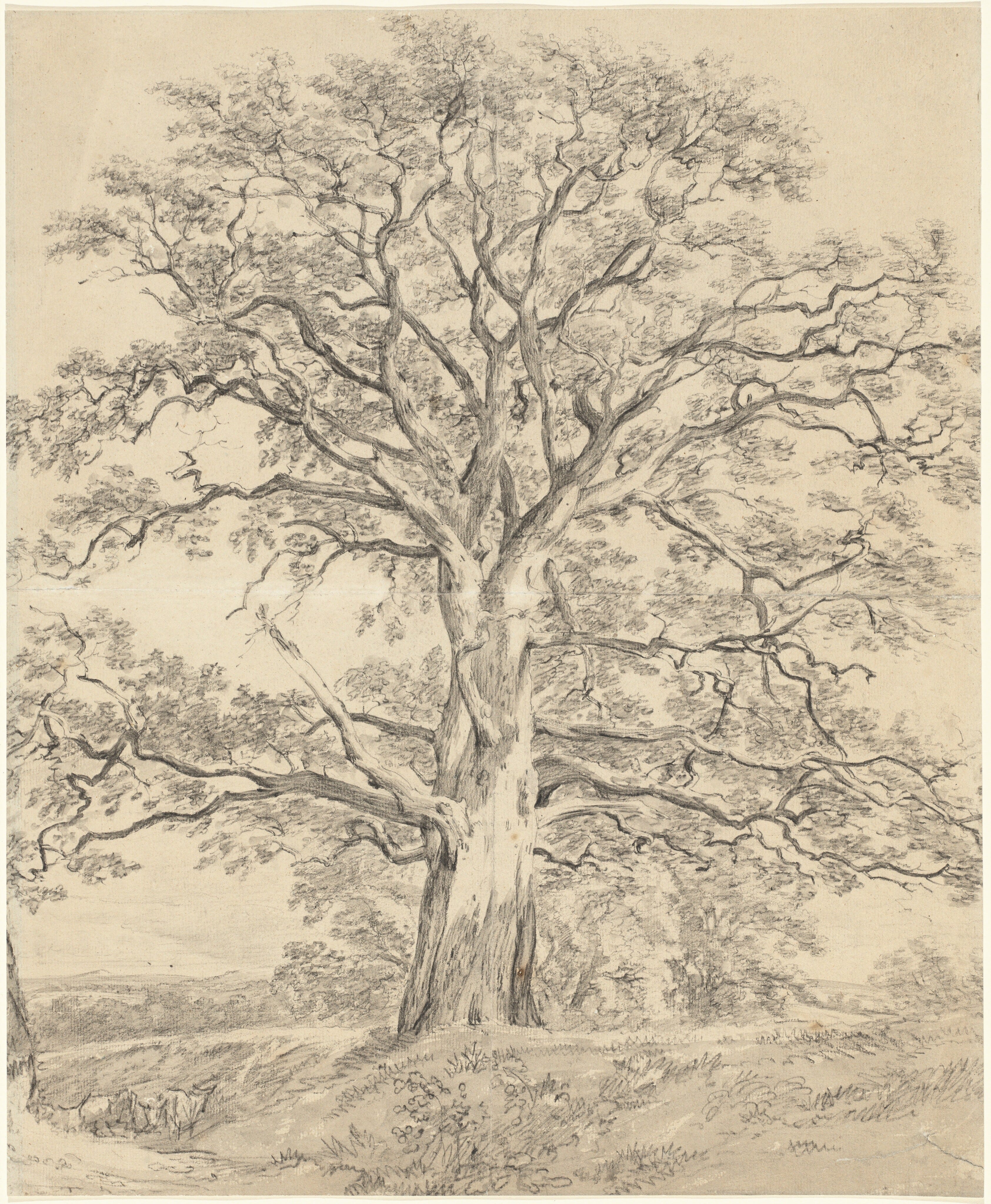
On his return home from a visit to the Rostov’s summer residence in Otradnoe in mid-spring, while passing an oak tree that had previously evoked in him feelings of contempt for life and youth, Prince Andrei Bolkonsky in Tolstoy’s War and Peace was struck by a sensation of levity, youth, and possibility, immediately followed by a flood of memories of the greatest import to him. Tolstoy describes it thus:
“… All at once he was seized by an unreasoning spring-time feeling of joy and renewal. All the best moments of his life suddenly rose to his memory. Austerlitz with the lofty heavens, his wife’s dead reproachful face, Pierre at the ferry, that girl thrilled by the beauty of the night, and that night itself and the moon, and […] all this rushed suddenly into his mind.”1
Why are these the best moments of Prince Andrei’s life? What thread runs through them? And finally, how does their significance impact him so as to redirect his life?
In order to begin the inquiry, it will be necessary to offer in several broad strokes the commonly perceived attributes that define Andrei. When he first appears in the salon of Anna Pavlovna and later while alone in conversation with his childhood friend Pierre, he seems very much as his sister Marya later describes him: “You are good in every way André, but you have a kind of intellectual pride, —and that’s a great sin.”2 This pride is constituted by a kind of scorn for all things simple, feminine, and religious, generally with the exception of his dear sister Marya herself, whom he loves dearly. In fact, this intellectual pride seems to be nothing but an emulation of his father, the man who has certainly had more influence on Andrei’s life than anyone else. In line with his admiration for him, Andrei desires the perfection of moral and intellectual virtue for the sake of glory, at the expense of being humane. He seeks to impose the clarity of a rational system, yet this aim seems to stem primarily from a deeper need for recognition of excellence from his revered father. This desire is the first foundational stone in Andrei’s soul to come under attack, in a sweeping experience of human insignificance beneath the Austerlitz skies.
Andrei’s search for glory culminated on the fields of Austerlitz, in heroically lifting the standard—the very image of an idea and very far from the reality of the Russian people, which finally drove the French back— and plunging into the heart of the battle when the conditions had become seriously unfavorable to the Russians. This way of being had for Andrei the hope of culmination in achieving the sort of success exemplified by the hero he secretly admires: Napoleon. Yet moments after Andrei is wounded, Napoleon himself walks by and Andrei can see nothing in him but pettiness, insignificance and vanity, brought out in striking contrast with “what was now passing between himself and that lofty infinite sky.”3 The Battle of Austerlitz revealed to Prince Andrei both the meaninglessness of glory and the possibility of a natural, non-cerebral way of moving through the world.
“How quiet, peaceful, and solemn, not at all as I ran,’ [he] thought… ‘—not as we ran, shouting and fighting, not at all as the gunner and the Frenchman with frightened and angry faces struggled for the mop: how differently do those clouds glide across that lofty infinite sky!” 4
In the face of a grandeur surpassing the human conception of glory, or greatness, Andrei is moved to an awareness of the unimportance of human life, of the futility of all human aims. Yet in all of this loss of certainty in human values, something remains: for what is to be made of this natural movement of the clouds, this solemn participation in the continual movement of life, which did not contain over and above itself a rationalization of what it was, or what it was for? It is not entirely certain, but seems to be echoed in Platon Karataev, the joyous peasant who exudes the immediacy of the physical world and complete rootedness in the ever moving stream of life; never quite saying the same thing twice. For Andrei, an awareness of the being-of-the-world beyond humanly conceived sources of meaning begins to break through, but not strongly enough to permanently alter his mode of being.
The second moment, Andrei’s vision of his “wife’s dead reproachful face” is complex and difficult to parse; all we are given about his inner life in this instant is: “Prince Andrei felt that something gave way in his soul, and that he was guilty of a sin which he could neither remedy nor forget. He could not weep.”5 Andrei comes up against, for the first time, the sense of untimeliness. He has been softened, awakened, by his experience beneath the lofty sky, and he returns to his wife with the word “My darling! … —a word he never had never used to her before.” Yet the world did not wait for his awakening from the dream of glory—and the reality of being too late leaves him irreparably broken. “Too late” becomes a continual touchstone of self-description for Andrei, who expresses the untimeliness of the intellectual. He is always catching up to himself, endlessly engaged in an attempt to comprehend the whole, and missing life as it is actually happening. It may also be remarked that in an inexpressible, largely unconscious manner her innocence, his guilt, and the empty reality of death, tore an opening in the fabric of Andrei’s web of rationalization, again exposing him to life as it actually is. It is likely this aspect that makes it one of his “best moments.”
While death marks the first two moments, a shift occurs in or around the third. Pierre at the ferry provides the first reawakening of the feelings stirred in Andrei at Austerlitz through a discussion of living for oneself versus living for others, which Andrei takes to mean living for ideals. They talk of God, of diversion, and of the needs of the spirit, and of the body. Andrei is deeply critical of the idea that anything beyond animal happiness is possible or desirable. He wants to do nothing, and desires to escape from life and entanglements as far as possible. Yet in the course of the conversation between the two friends something awakens in him, a feeling which he likens to what he experienced at Austerlitz: “something that had long been slumbering, something that was best within him suddenly awoke, joyful, and youthful, in his soul.”6 This inchoate feeling appears to be provoked by Pierre’s naïve, healthy commitment to an ideal beyond the merely bodily existence of our daily lives, and it momentarily pulls Andrei towards a source of movement and action not directly informed by his rational mind. For a moment Andrei glances upwards, and once again the sky again serves as the visual reminder of the existence of life’s movement outside of the narrative he has imposed upon his own existence, which has now become one of withdrawal from the world provoked by an insight into the emptiness of worldly goals. Yet this withdrawal has left him with the deep dissatisfaction of being trapped in his own self, cut off from any awareness of how his own life is inextricably woven into the greater whole of which he is apart: Russia, the political reality of Europe, and the natural world. He stands aware of the emptiness of the goals of the self, yet more deeply enmeshed in its fabric than ever before. Pierre’s naïve commitment to goals beyond himself, regardless of how close he actually comes to achieving them, reminds Andrei of the feelings unfolded in his soul by the grand, stately, yet completely fluid movement of the clouds. This memory is transformed through his encounter with Pierre into the secret that is held at the center of his existence: “Though outwardly he continued to live in the same old way, inwardly he began a new life.” This encounter has opened up a new inwardness in Prince Andrei, an inward reflectiveness that will be essential to the culmination of the four moments and its transformation into action. In fact, this begins a period of melancholy reflection for Andrei that he never entirely overcomes. This is in itself a kind of addicting state, one that draws the individual into aesthetic and intellectual contact with their own past in its own pure phenomenal existence, as the stream of memory, while retaining the structures of meaning that they impose upon the world. It thereby reveals the contradiction between those two things in such a high degree that it leads us to determine that any future action—which would require harmonizing the two—is impossible, and therefore the best course is resignation. This is the essential, tragic, untimeliness that Andrei never fully overcomes.
The final, and perhaps most significant moment in Andre’s life that will be examined here is his unseen encounter with Natasha at the window in Otradnoe. This is the catalyst that sets in motion the reflections at the oak tree that is now transformed by the youthful life of spring, mirrored in Andrei’s inner life by his blossoming feelings for Natasha. Overhearing the young woman discourse in rapture to her friend about the beauty of the night, Andrei once again feels the power of a life force unimpeded by the conceptual ideals he holds. “In his soul there suddenly arose such an unexpected turmoil of youthful thoughts and hopes, contrary to the whole tenor of his life…”7 The desire for union with this strange consciousness so in touch with natural power and beauty and so opposed to his own finally provides, in a reflection the following day sparked by seeing the same old oak tree transformed by life, a living reality that ties together the decisive feelings of “what is best in him” that was present in all three of the former moments discussed. Instantly, he knows his life is not over, that there is strength left in him. His attitude of resignation melts into renewed desire for action. Clearly a force of great power has surfaced. This is nothing less than the irrational undercurrents of life underlying all the moments mentioned here, united in a desire for the happiness embodied by Natasha in her un-self-conscious liveliness. Remarkably, Andrei does not directly experience the full force of this stream in the decisive instant, but instead only the accumulated memories of these moments arise in him. Indeed, the reflection upon these moments is itself the way that the irrational forces of life, that are so integrated in Platon Karataev, manifest themselves in someone like Andrei; in a mind defined by its imposition of intellectual order upon itself.
Immediately, Andrei’s intellect attempts to rationalize these feelings, and through the application of “wretched logical arguments” he had just previously used to just the opposite direction, he decides he must once more play a more active part in life. This process—sustained by glancing continually between his own reflection and Liza’s portrait— begins to muddy the water that was once clear, as guilt and desire for life began to conflict one another and lose their clear, non-contradictory resolution that occurred outside the conscious processes of reason. The resolution of these experiences in the moment of reflection can hold its sway in Andrei’s strong intellect only momentarily: Soon enough he suppresses these newly united feelings as “irrational, inexpressible thoughts, secret as a crime, which altered his whole life and were connected with Pierre, with fame, with the girl at the window, the oak, and woman’s beauty and love.” In fact, to compensate for their power, he begins relating to other human beings in severely logical ways, void of any trace of compassion. This attitude, directed particularly at his sister Marya and anyone else who lives more by human intuition and religiosity than by reason, becomes so severe that was as if he were “punishing someone for those secret illogical emotions that stirred within him.”8
Instead of being propelled by the feelings evoked by these memories towards a way of being in the world that does not incessantly, presumptuously impose a frame of interpretation that is rigid and forever inadequate to the rushing torrent of human existence, Andrei’s intellect rebels with a ferocity that is astonishing, and dictates the exact opposite course. This rebellion consists in the determination to engage in an attempt at rational reform of the army from above. The powerful feelings of desire have immediately been channeled into a form not actually conducive to life, but once again based on the desire to impose order and be acknowledged as worthy of honor. There is present in Andrei resentment of the fact that his rational mind does not make the most significant decisions of his life, but only complicates and disturbs them, and this resentment only furthers the complication. What was at once directly present has become entrapped in a web of rationalization that results in Andrei being at odds with himself.
It may be said in conclusion that Andrei’s habitually rational approach tenaciously prevents any other way of living from genuinely arising, and he must play out the desire to impose order in this manner to its greatest extreme, which culminates in his admiration for Speransky, whom he respects above all for his capacity for never doubting the validity of reason and maintaining absolute certainty of the possibility of controlling himself and the army with it. The discovery that remains for Andrei, namely that this is impossible, is the untimely turning point towards which he is headed from that fateful moment at the oak tree.
All quotations are from the revised edition of the Maude translation of War and Peace, Oxford, 2010. (Book 2, part 3, chapter 3, p.452.)
Book 1, part 1, chapter 25, p.113.
Book 1, part 3, chapter 16, p.299.
Book 1, part 3, chapter 19, p. 310.
Book 2, part 1, chapter 9, p.351.
Book 2, part 2, chapter 12, p.417.
Book 2, part 3, chapter 2, p.451.
Book 1, part 1, chapter 25, p.113.
A wonderful, beautifully detailed analytical essay.
For me, though, the oak scene has always been something I feel more than I can explain. It is one of the most tender and moving passages in the entire novel. Everything seems lifeless. The oak is dark and motionless. And then, almost imperceptibly, life returns. Every time I reread it, I am reminded that some of the deepest truths in literature are experienced before they are understood.
K.S., the scene at the end where the oak tree welcomes spring was truly beautiful.
Maybe people are like trees too. Even when we think, “It’s too late,” a new season may still come again!! 😇