
Narcissus and Adonis
A reading of Shakespeare's Sonnet 3

Look in thy glass and tell the face thou viewest,
Now is the time that face should form another,
Whose fresh repair if now thou not renewest,
Thou dost beguile the world, unbless some mother.
For where is she so fair whose uneared womb
Disdains the tillage of thy husbandry?
Or who is he so fond will be the tomb
Of his self-love, to stop posterity?
Thou art thy mother’s glass, and she in thee
Calls back the lovely April of her prime;
So thou through windows of thine age shalt see,
Despite of wrinkles, this thy golden time.
	But if thou live rememb’red not to be,
	Die single, and thine image dies with thee.
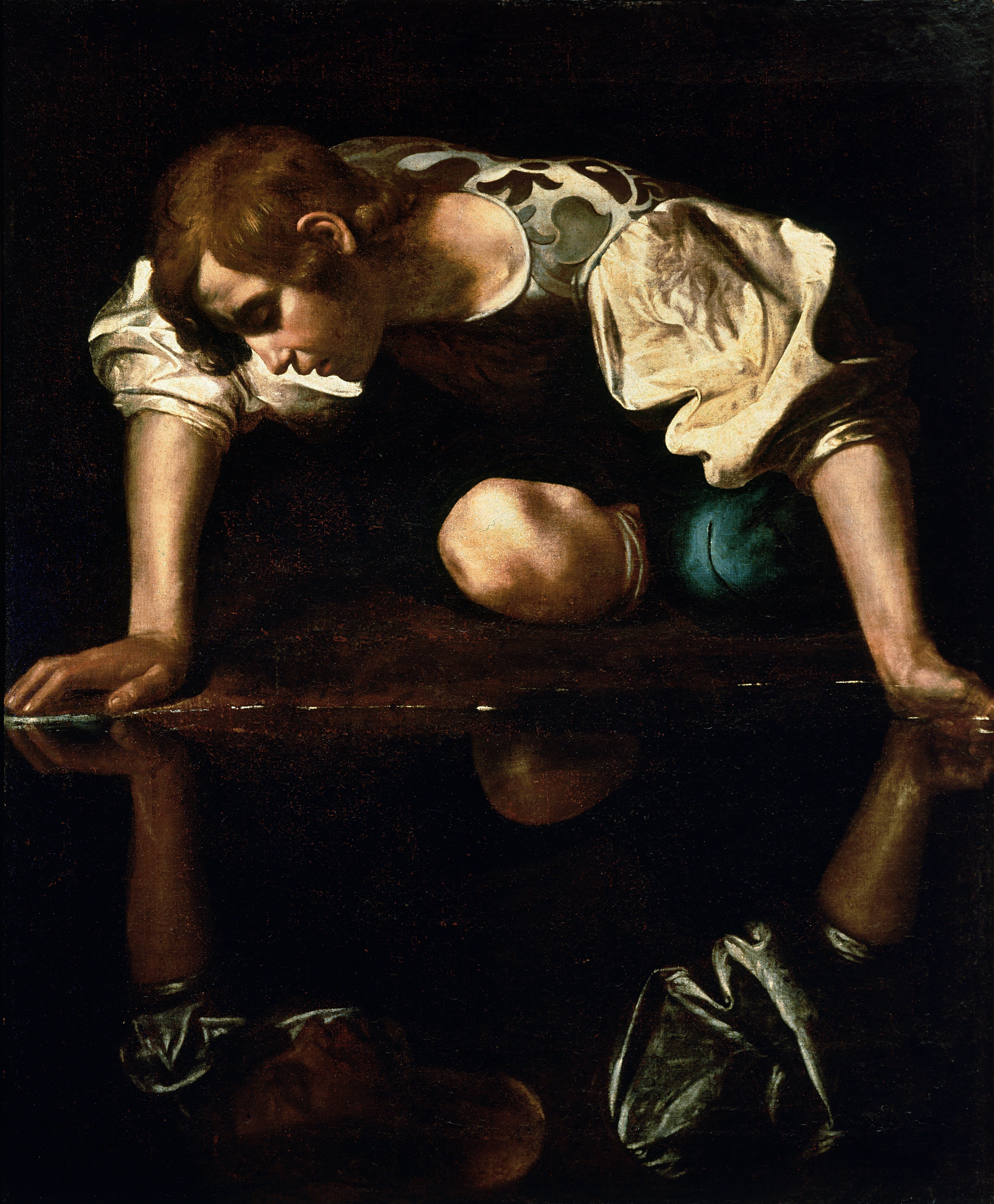
Sonnet 3 sounds a new note, that of the eternal feminine principle, in the form of the young man’s mother. Venus, from Venus and Adonis, haunts this sonnet, and perhaps all of the “procreation” series. Simultaneously, Shakespeare shifts from the sheer physicality of the first two sonnets, to imagery. The appearance, or face, of the young man is the focus here, and appropriately, mirrors and windows are the primary images. The Platonic worldview is still very much in evidence, and will only grow stronger in succeeding sonnets. This poem inaugurates the movement from the bodily to the image; this is one step towards the εἶδος, or form, of the beautiful.
The speaker observes that the young man is made in the image of his mother, and should turn towards another woman upon whom he can beget her image again in turn. By doing so, he will one day be able to look through the “windows of [his] age” at his own “golden” time in which he currently finds himself. The window offers a glimpse of something outside the limits of the decaying house of his body, and hints at an even greater beauty visible beyond the one he sees in his child.
In the young man’s current, personal “golden age,” he is turned inward. Even looking outward he gazes upon his own reflection in the mirror, which the speaker urges that he treat as another self:
Look in thy glass and tell the face thou viewest,
Now is the time that face should form another...
In an age entranced by self-image, this is perhaps slightly startling advice. A youth-centered culture is, oddly, not one that is particularly interested in the perhaps cold comfort of reproduction of the self through having children. For the more narcissistic we are, like the young man in the sonnets, the less tempting the idea of sacrificing ourselves for the sake of another becomes. It is precisely overcoming this narcissism in the young man, and perhaps us, that the speaker sets as his aim.
One of the speaker’s strategies is shame. He mentions, through euphemism, a typical struggle for a young man.
For where is she so fair whose uneared womb
Disdains the tillage of thy husbandry?
Or who is he so fond will be the tomb
Of his self-love, to stop posterity?
This makes several assumptions simultaneously. First, it assumes that the young man is truly handsome, and unlikely to be spurned in his advances by any pretty young woman. Second, it assumes that there is hardly anyone stupid (“fond”) enough to choose to end his own line of descendants through unfruitful pleasure apart from a woman. Like a mirror, (or perhaps a mother?), this sonnet simultaneously flatters and shames the youth. It even has a whiff of Stoic-inspired modern self-help for young men about it, which is perhaps rather off-putting. The poem firmly adopts the portrayal of the young man as Adonis, who spurned the advances of even the goddess of love herself, while also alluding to the self-obsession of Narcissus.
The final couplet assumes a sarcastic tone, suggesting that if, on the other hand, the youth is living to not be remembered, then he should go ahead and stay single. The speaker at last turns towards a rhetorical invocation of reputation, which lives beyond us in the names and faces of our children. Once again, this sonnet exhibits a longing for more than bodily survival, it points towards the enduring nature of the memory of parents in their children. The final line returns to the idea of an image, which emerges as a something that can perish, but will outlast a single generation. There is a distinct air of dissatisfaction at the end of the sonnet. The piece serves as a sort of minor fourth chord for the series, and the reader must delay poetic gratification, exactly as the young man must forgo short-lived pleasures for the intimations of immortality.
The sonnet does contain startling advice. I was nodding emphatically at that line you wrote. The focus on having children SHOCKED and puzzled me when I first read some of the sonnets. I love the idea that it is meant to disrupt narcissism, that if you look in the mirror and see only yourself, that is incorrect; you should also see your mother and your children. It offers a self that is more continuous and abundant and requires a retraining of the eye—but I think would still be off-putting in our culture at large!
A sonnet with a cliffhanger! This is a beautiful piece, thank you.