
Looking at Pictures
A recommendation of Robert Walser's underappreciated gem

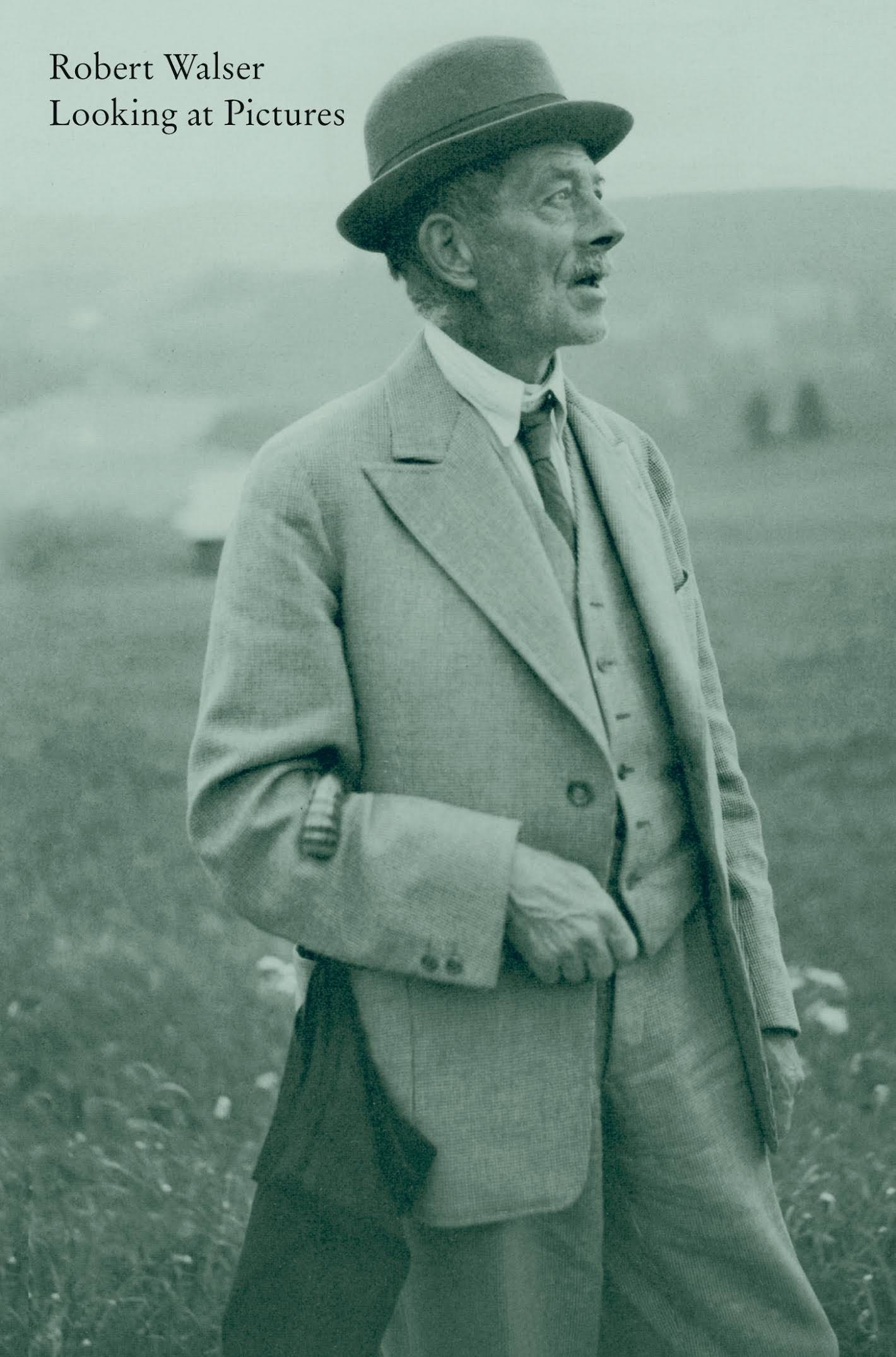
The Swiss writer Robert Walser did not want fame, and, at least in the United States, he has by and large, avoided it. He wanted influence, however, and that he has achieved. Much admired by Kafka, Walter Benjamin, and Robert Musil, he spent much of his life working as a bank clerk, like T.S. Eliot, and, rather romantically, as a butler in a castle. He wrote six novels and over a thousand stories, including the splendid collection, Berlin Stories. Like John Clare and Hölderlin, he suffered from acute mental illness at the end of his life. I want to recommend to your attention a small volume published by New Directions and translated by Proust scholar Lydia Davis and others, called, quite simply, Looking at Pictures. This sumptuous piece is a series of creative observations of approximately twenty paintings and drawings. In them, Walser deposited his “sensibilities, [his] views on art, [and his] soul, as if placing them upon a small, modest sacrificial altar…” (Walser 12) He claims he intended to burn his reflections, but if says that if they should have to survive, “let’s hope they fall into the hands of some curiosity-driven chatterbox of a writer…” It is a description that suits me dismally well.
The book opens with marvelous descriptions of fog, very much like those in the opening pages of Bleak House, except the tone is rapturous, and noble. It quickly moves onwards, with the atmosphere of one seeking a mountain view above the clouds, to reflect on paintings by Lucas Cranach the Elder, and Vincent Van Gogh. Of the painting below, a piece he initially disliked, he says:
Without much intention… something great and noble enters into the simple picture, a solemnity of soul it is impossible to overlook.
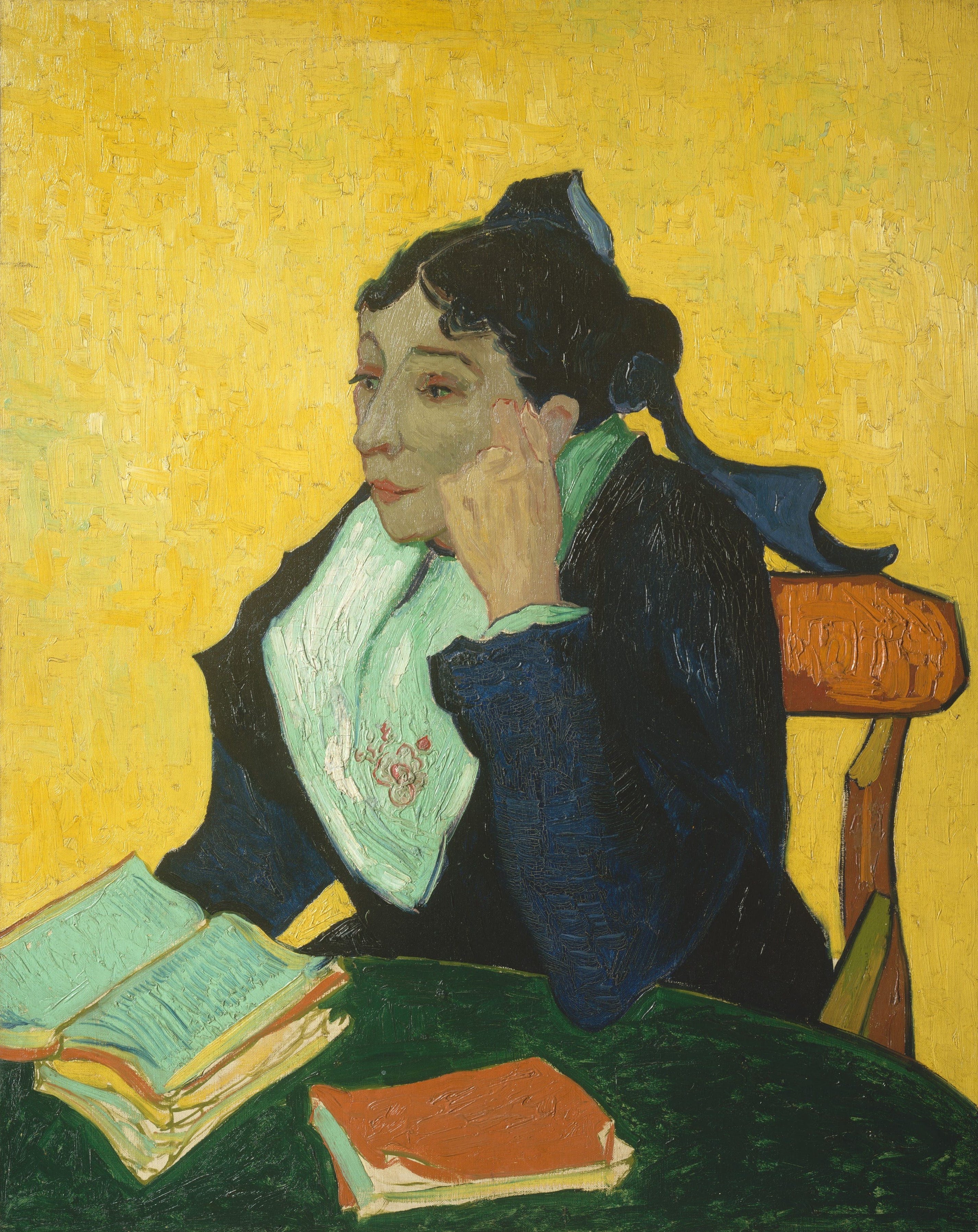
He notes that the painting has more inward than outward beauty, and characterizes the effect it has on him as being like “that of a solemn tale.” Walser imagines that Van Gogh is conveying something of the way in which the bright, happy days of youth fade quickly into a life of toil. “He paints her just as she is, plain and true.” And indeed, isn’t this exactly the appeal we find in Van Gogh?
Another painter whose work Walser notes, is Rembrandt, another great painter of the everyday. Yet the piece that catches Walser’s critical eye is not a portrait of an ordinary person, but rather one of David and King Saul. He focuses on Saul, on his dislike of being feared; a man sick with an undisclosed malady of the soul. Walser hears, as it were, the music of David’s harp, saying “don’t be sad. Should a ruler not lead by offering the most beautiful example, should he not be the gentlest, most patient man among his people? Should he not be the best of men and possess the biggest heart?” (Walser 82) We instinctively feel that despite his own flaws, this description matches the future King David himself, not Saul.

Turning towards a moment just beyond the temporal horizon of the painting, Walser envisions the moment that the king goes mad (certainly hinted at by the distortion of his face caused by the obscuring curtain). Saul hurls the spear, and David laughs, saying that it might have hit him, yet he is grateful to be alive. Walser frequently chooses to interpret paintings beyond what is merely presented: he appears to be trying to capture their inner beauty and meaning by doing so.
I will not prolong this close reading of a master of close reading. Instead I merely urge you to discovers the many delights of Robert Walser’s writings on your own.
I inherently trust and feel a fellowship with anyone who sees the beauty of Walser.
loved jakob von gunten so much